




Colour and texture decision guide
The sofa cover visibility guide
The best sofa cover is not always the one that looks cleanest in a product photo. It is the one that still looks good on day three, after pets have slept on it, kids have eaten near it, sunlight has hit it, and normal household dust has settled into the room.
Why clean-looking and easy-clean are different decisions
A washable sofa cover can be easy to clean, but that does not mean it will look clean between washes. Visibility is about what the eye notices first: lint on black fabric, pale fur on charcoal, crumbs on velvet, water marks on flat fabric, or dust on a sunlit seat. A practical cover should be judged by both cleaning and camouflage.
That does not mean hiding dirt instead of cleaning it. It means choosing a colour and texture that keeps the lounge looking composed during normal life. In a real home, people do not wash sofa covers every time a dog jumps up or a child drops one biscuit crumb. The smarter goal is a cover that gives you time: time between resets, time before the room looks messy, and time before a mark becomes the only thing you see.
The five things your sofa cover has to visually survive
Most buyers think about spills first, but the daily visual mess is usually smaller and more constant. Fur, lint, dust, crumbs and pressure marks are the real test. They are also why two covers in the same colour family can perform differently. A flat black cover and a charcoal textured cover do not read the same. A plain white cover and a woven ivory cover do not age the same through a week of normal use.
| Visible issue | Worst choice | Better direction |
|---|---|---|
| Pale pet fur | Flat black or deep navy | Grey, taupe, oatmeal, mixed weave or pattern |
| Dark pet fur | Pure white or cream flat fabric | Stone, warm beige, olive, charcoal texture or patterned jacquard |
| Dust and lint | Very dark smooth covers in bright rooms | Mid-tone chenille, woven texture or subtle stripe |
| Kids' crumbs | Deep pile where crumbs disappear | Removable seat pieces that can be shaken out quickly |
| Seat pressure marks | Flat shiny surfaces | Textured, ribbed, quilted or low-contrast woven covers |
Choose by contrast, not by colour name
Colour names can mislead. Beige may be warm, cool, yellow or grey. Charcoal may be soft and textured, or it may be flat and lint-hungry. The useful question is contrast: will the most common mess in your home stand out sharply against the cover?
If you have a white dog, a black cover creates high contrast. If you have a black cat, a cream cover creates high contrast. If you have both, choose a mixed mid-tone or textured pattern. If the room has strong daylight, avoid making the sofa the darkest surface in the room unless you are happy to brush it often. If the sofa sits under downlights, remember that shiny or flat fabrics can show pressure marks more clearly at night.


Texture is the hidden advantage
Texture breaks up the surface. That is why woven, chenille, jacquard, ribbed and checker details can look more forgiving than plain fabric. They create tiny shadows and highlights, so a single hair or crumb does not dominate the whole seat. This is also why a textured neutral can look richer than a flat bright white cover.
Texture has to match the room. A plush cover can make a winter lounge feel inviting, but it may not be the best choice for a biscuit-heavy family sofa. A tighter chenille or woven cover may be easier to shake out. A stretch cover can clean up the silhouette of the sofa, but if it is very smooth and dark, lint may be more visible. No cover solves every problem; the right one solves the problem that actually happens in your home.
Start with pet-friendly sofa covers, chenille sofa covers, washable sofa covers, stretch sofa covers and couch covers.
Product directions by household type
Sofa Decor Marlow Pet Safe Chenille Sofa Cover Australia
Best for pet homes that need a forgiving chenille texture and everyday visual softness.

Sofa Decor Maison Pet Friendly Chenille Sofa Cover Australia
Good for homes that want pet-friendly comfort without a cold technical look.

Sofa Decor Slate Chenille Tassel Sofa Cover Australia
Useful when the room needs a darker, dressed finish but still wants tassel texture.
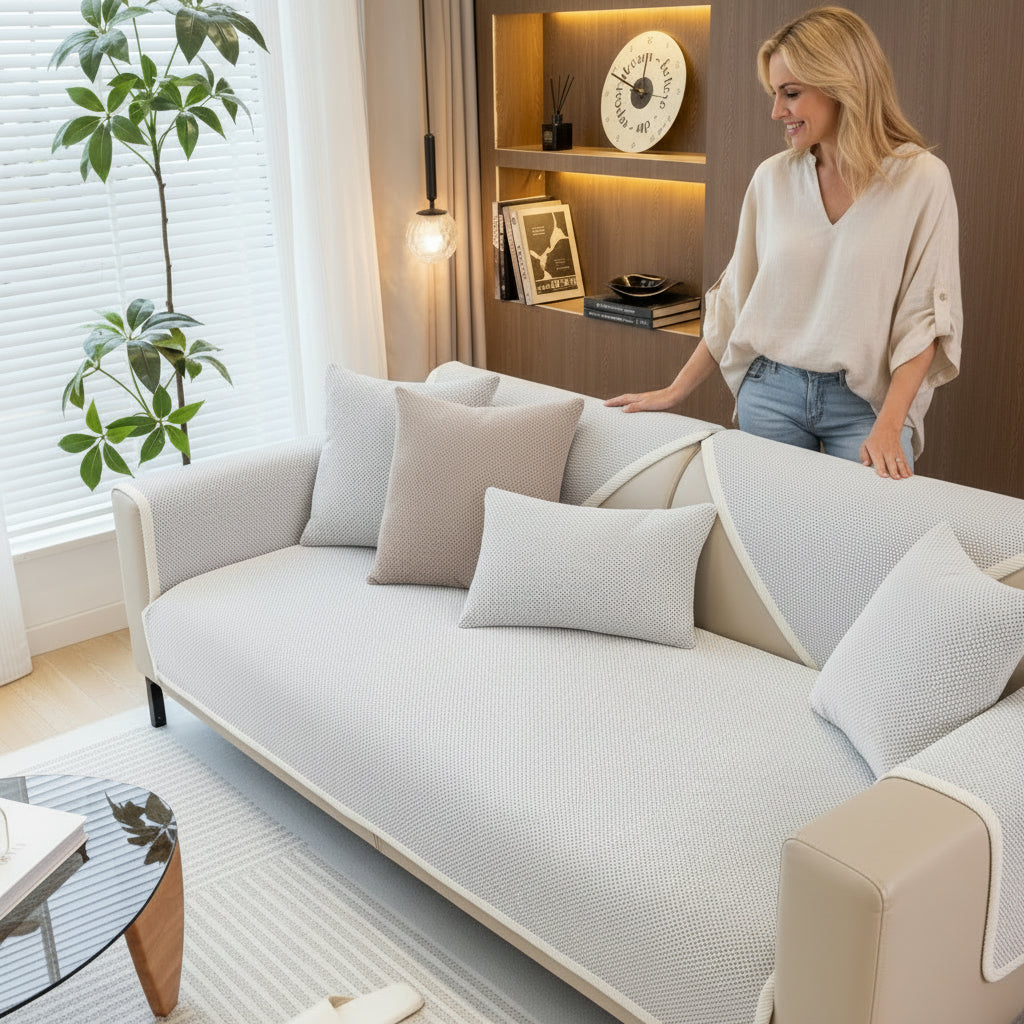
Sofa Decor Alessia Woven Chenille Sofa Seat Cover Australia
A woven seat-cover direction for modular sofas, high-use seats and layered neutrals.
Sofa Decor Palermo Checker Chenille Sofa Cover Piece Australia
A checker chenille option when pattern is needed to break up daily marks.

Sofa Decor Noira Water Resistant Stretch Sofa Slipcover Australia
A stretch-cover direction when the sofa shape needs a cleaner all-over surface.
Room-by-room visibility shortcuts
Family room
Choose mid-tone texture first. Family rooms rarely stay photo-clean, so the goal is controlled softness: washable, easy to reset, and not so pale that every mark becomes urgent.
Pet sofa
Match the dominant fur colour, then add texture. If the pet has mixed colouring, avoid extreme light and dark choices. A patterned or woven cover is often calmer than a flat solid.
Formal lounge
You can go lighter or more dramatic because traffic is lower, but the cover still needs to relate to curtains, rug, timber and artwork. A cover that looks isolated will look temporary.
Apartment with strong window light
Use texture and mid-tones. Strong light reveals lint and surface marks, especially on very dark flat fabrics. Keep a lint brush or fabric brush near the room if dark covers are part of the design.
Build a cleaning routine around visibility
The most useful routine is small and frequent. Shake removable pieces before washing. Brush fur before it embeds. Spot-check the arms and seat front because those zones show contact first. Rotate separate seat pieces if one side gets more sunlight or pet use. If crumbs are the issue, pick covers that can be lifted and shaken quickly, not just covers that look beautiful in a still photo.
For design context, texture is not just decorative. It gives the room depth and gives the sofa surface forgiveness. When the cover colour, texture and cleaning rhythm work together, the lounge looks intentional even before it is perfect.
Useful external reading
- Koala sofa fabric guide: Fabric care decisions should consider water resistance, fade resistance and soil resistance.
- TLC Interiors texture guide: Texture is a useful design layer when a room feels flat or unfinished.
FAQs
What colour sofa cover hides pet fur best?
There is no single best colour because pet fur varies. Match the cover to the fur tone you see most: beige and oatmeal for pale fur, grey and taupe for mixed fur, charcoal or patterned textures for darker fur, and mid-tones when the home has several pets.
Do dark sofa covers hide marks better?
Dark covers can hide some spills and shadows, but they often show lint, dust, pale pet hair and crumbs. A mid-tone textured cover is usually more forgiving for daily family use.
Are patterned sofa covers harder to style?
Patterned covers need calmer cushions and simpler surrounding colours, but they can be excellent for hiding small marks. The key is choosing a pattern that repeats colours already present in the room.
Which texture looks clean the longest?
Low-contrast chenille, woven, jacquard and subtle pattern usually look cleaner between washes than very flat, very dark or very pale surfaces.